Captures particulate where a documented need warrants it. Choose a rating that balances capture, pressure loss and service.
CASTLE ROCK · COLORADO
Castle Rock Water Filtration & Softener Guidance
Compare water softeners, whole-home filtration, reverse osmosis and well-water treatment for your actual Castle Rock supply and goals.
Find your next step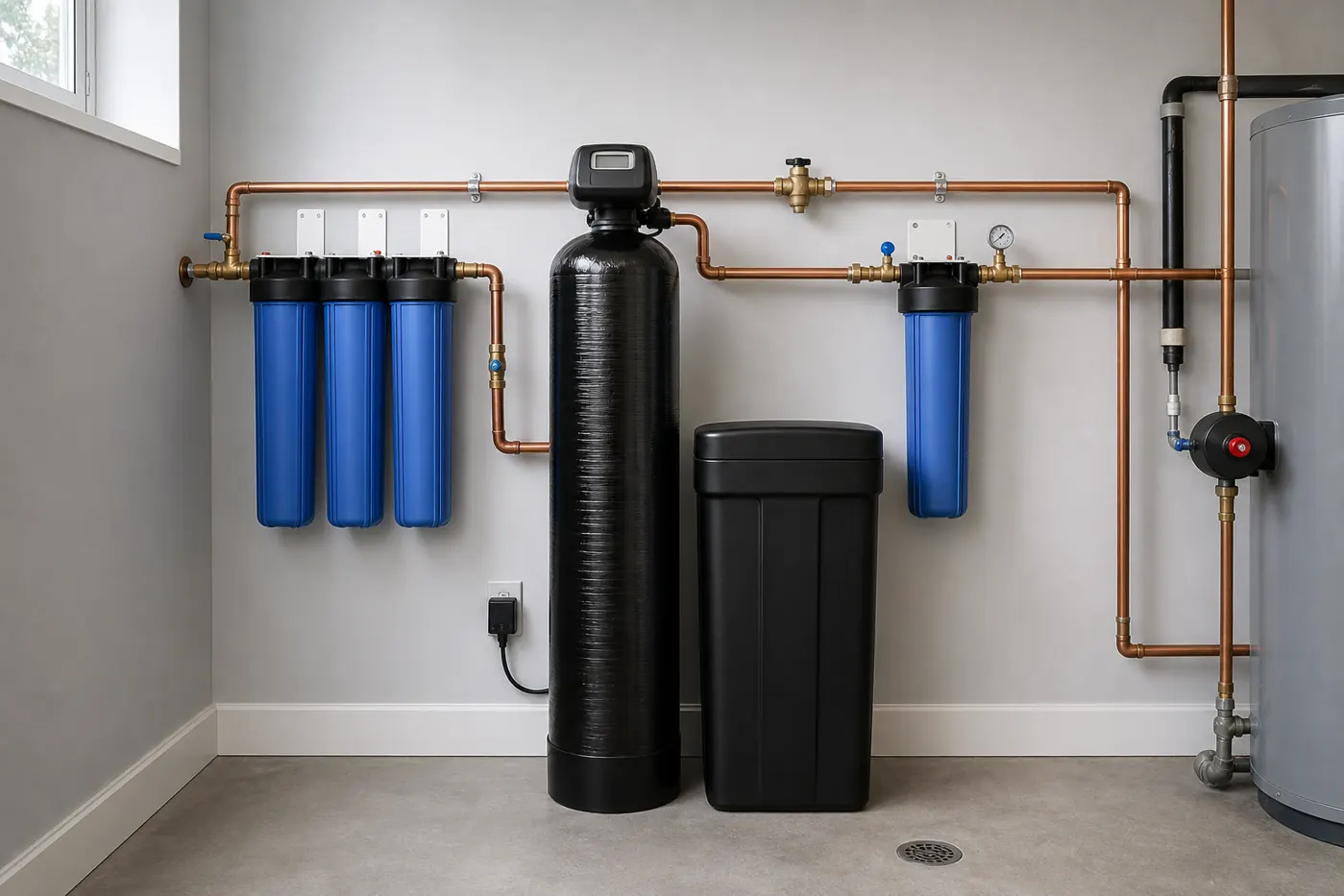
Compare treatment roles
| Option | Primary role | Evidence to check |
|---|---|---|
| Softener | Calcium and magnesium hardness | Untreated hardness, capacity and flow |
| Whole-home filter | Supported sediment, taste or other reduction | Exact model claims, capacity and service flow |
| Under-sink RO | Dedicated drinking and cooking water | Model-specific claims, pressure and output |
| Well treatment | Property-specific well targets | Laboratory results, pump and backwash requirements |
Which treatment fits a Castle Rock home?
Choose the job first. Measured hardness and mineral scale point to a softening decision. Sediment or disinfectant taste calls for a suitable filtration target. A dedicated drinking and cooking outlet can be a point-of-use decision. A private well requires property-specific results before a treatment sequence is selected. These are separate jobs, even when a proposal includes several tanks. Ask how each stage will be verified and maintained rather than treating more equipment as proof of better water.
Compare the five starting points
Water Softeners for Castle Rock Homes
A softener treats measured calcium and magnesium hardness. It can reduce the mineral load that forms scale; it does not make a blanket promise about water safety.
Whole-Home Water Filtration in Castle Rock
A whole-home filter treats water near the service entry. Choose the media and capacity for a defined substance, taste concern or particulate problem, then check that it can handle household flow.
Reverse Osmosis Drinking Water in Castle Rock
Under-sink reverse osmosis focuses on drinking and cooking water at a dedicated outlet. Evaluate its certified reductions, output, pressure needs and maintenance before comparing tank and tankless models.
Water Testing for Castle Rock Treatment Decisions
A useful water test starts with a question: hardness and scale, taste, an existing system problem, or a specific laboratory concern. A sales demonstration is not a comprehensive laboratory result.
Private Well Water Treatment near Castle Rock
Private wells require property-specific sampling and a treatment plan built around actual results. The Town’s public-system hardness table must never be presented as a reading from a Douglas County well.
Castle Rock water: use the right report
The Town publishes a main-system report and a separate Bell Mountain Ranch report. Start with the supplier on your bill. A Castle Rock address does not prove that either report applies to the property. For the main system, the official 2026 report’s 2025 hardness table lists an average of 100 ppm as calcium carbonate and a range of 61–182 ppm. That converts to roughly 5.8 gpg on average and 3.6–10.6 gpg across those observations. Those figures are not a reading from your kitchen tap or a setting for a private well. Arrange appropriate measurement for the actual installation.
Taste, scale and drinking water are different decisions
Castle Rock Water describes chloramines as a secondary disinfectant. A homeowner comparing taste-oriented carbon equipment should ask about supported chloramine reduction at the expected flow. Softening focuses on calcium and magnesium; it should not be sold as the answer to every taste or contamination concern. Reverse osmosis focuses on a dedicated drinking-water outlet and supported model-specific reductions. A treatment recommendation should connect the actual goal, property evidence and equipment documentation. Compliant public-system monitoring and an optional home treatment preference can coexist. An equipment proposal is not evidence that the utility supply is unsafe.
From the entry line to the drinking tap
Targets supported taste or other reductions. Match the specific claim, flow and contact time.
Ion exchange addresses measured hardness. Confirm regeneration, drainage and recurring salt requirements.
A dedicated membrane system addresses supported drinking-water targets. Check output, efficiency and maintenance.
These stages show common roles; this is not a required package. A real design can omit stages or use a different sequence according to the evidence and model instructions.
Budget examples before a provider visit
These amounts are illustrative budgeting scenarios, not verified Castle Rock market rates or advertised provider offers. A written property-specific scope establishes the actual price. No financing or free-test offer is guaranteed.

$350–$1,500 · Drinking-water scenario
Compare a point-of-use filter or RO configuration, faucet, drain connection, installation and initial startup. Model, pressure requirements, tank/tankless design and refrigerator connections change the scope.
$2,500–$6,500 · Whole-home scenario
Compare filtration, softening or a combined plan, using a defined target and household flow. Bypass, drainage, plumbing access, media and commissioning affect the installed total.
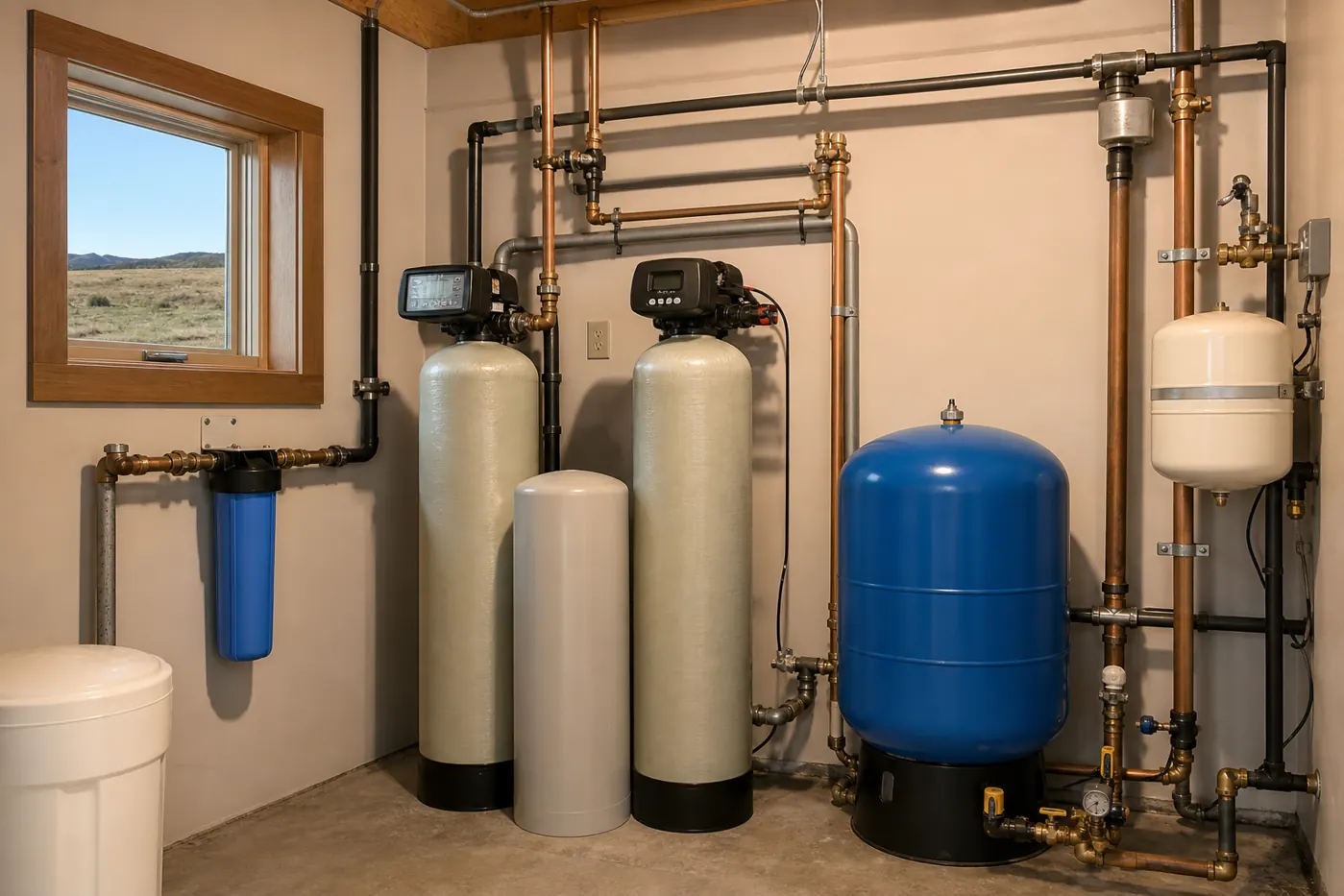
$5,000–$12,000+ · Complex-system scenario
A multi-stage well or high-capacity design can add laboratory work, specialty media, pumps, storage and electrical or drainage work. The test-supported scope matters more than a generic package name.
Avoid a guessed savings promise
Hard water can create scale-related maintenance concerns, but a website cannot measure your soap use, heater condition or appliance life from a household slider. Our educational check asks about source and goals and can convert a measured hardness value into grains per gallon. It does not forecast bills or diagnose contamination. If savings are part of a proposal, ask for the assumptions, evidence and costs included. Keep those calculations separate from a laboratory result or a verified equipment reduction claim.
Private well properties need their own evidence
For private wells, the Town’s hardness table is not a shortcut. EPA recommends annual well testing for total coliform bacteria, nitrate, TDS and pH, with additional testing based on circumstances. Follow the laboratory’s sampling and handling instructions. A provider should also consider the available pump flow and pressure, especially for backwashing equipment. A system that cannot meet its backwash requirements may not work as intended. Ask how a proposed stage addresses the measured chemistry and how the result will be verified after installation. A simple sales screen is not necessarily the full laboratory assessment needed for the property.
Start with the local guide or a practical checklist
Castle Rock Water Quality: Choose the Right Report
Use the Town’s main-system report, the separate Bell Mountain Ranch report or your private-well results according to the actual supply.
How Hard Is Castle Rock Water?
The main-system report’s 2025 hardness table is a starting point for comparison, while equipment settings require the property’s measured hardness.
Chloramine Filtration for Castle Rock Homes
The Town states that it uses chloramines as a secondary disinfectant. A taste-oriented filter proposal should address that specific target.
Compare Water Treatment Quotes Without Guesswork
Put the treatment target, verified capacity, installation and recurring obligations side by side.
Request water-treatment guidance
Tell us about your water concerns and the system you have in mind.