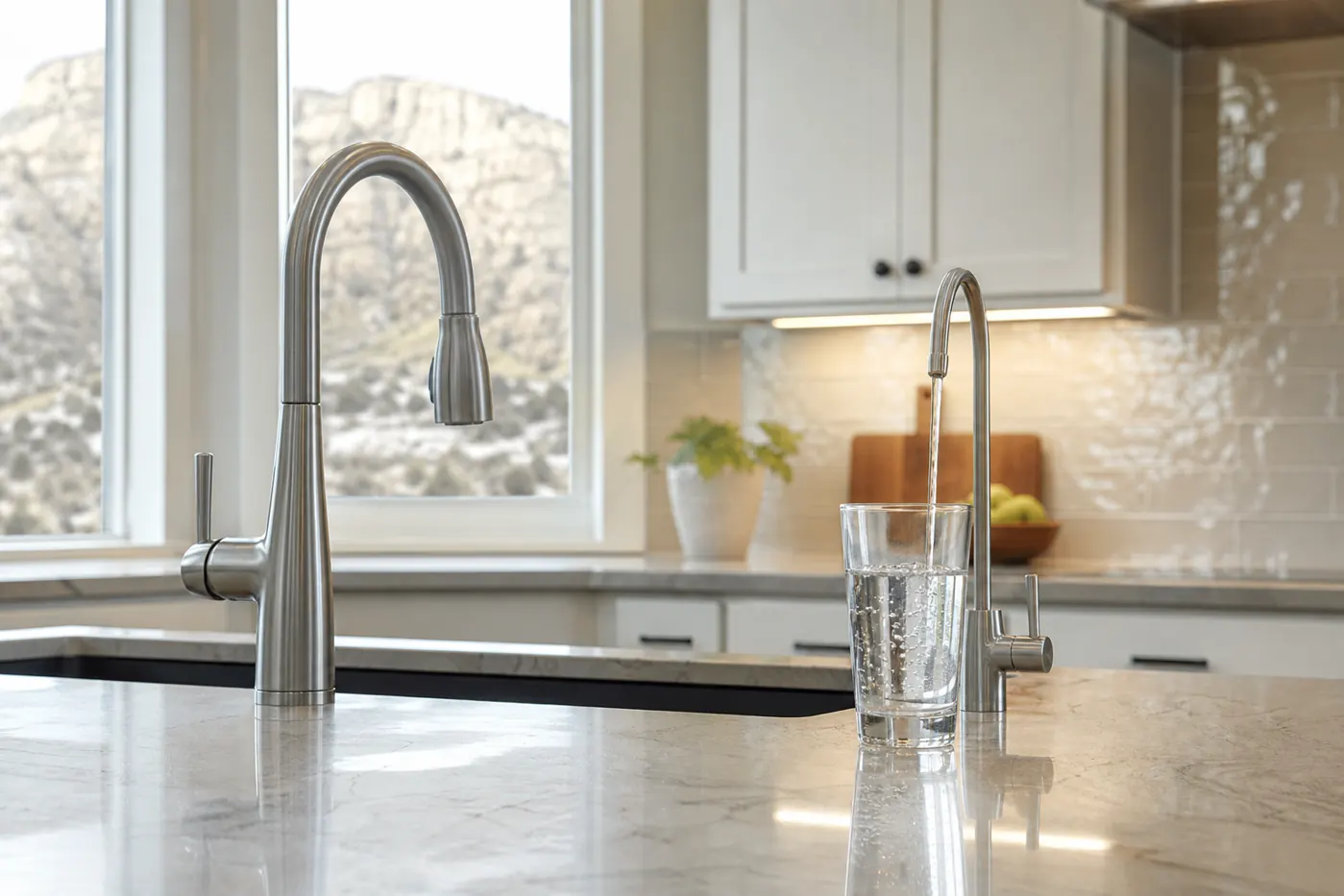
Bottled-quality water straight from your kitchen tap. A compact under-sink reverse osmosis system gives your family cleaner, better-tasting water for drinking, coffee, and cooking — and ends the bottled-water habit for good.
Treatment recommendations should be based on site conditions and measured water quality.
The gold standard for drinking water
Reverse osmosis (RO) pushes your water through an ultra-fine semipermeable membrane that blocks dissolved solids down to a microscopic level. What passes through is exceptionally pure, crisp-tasting water; what's left behind — minerals, metals, and other contaminants — is rinsed away to the drain.
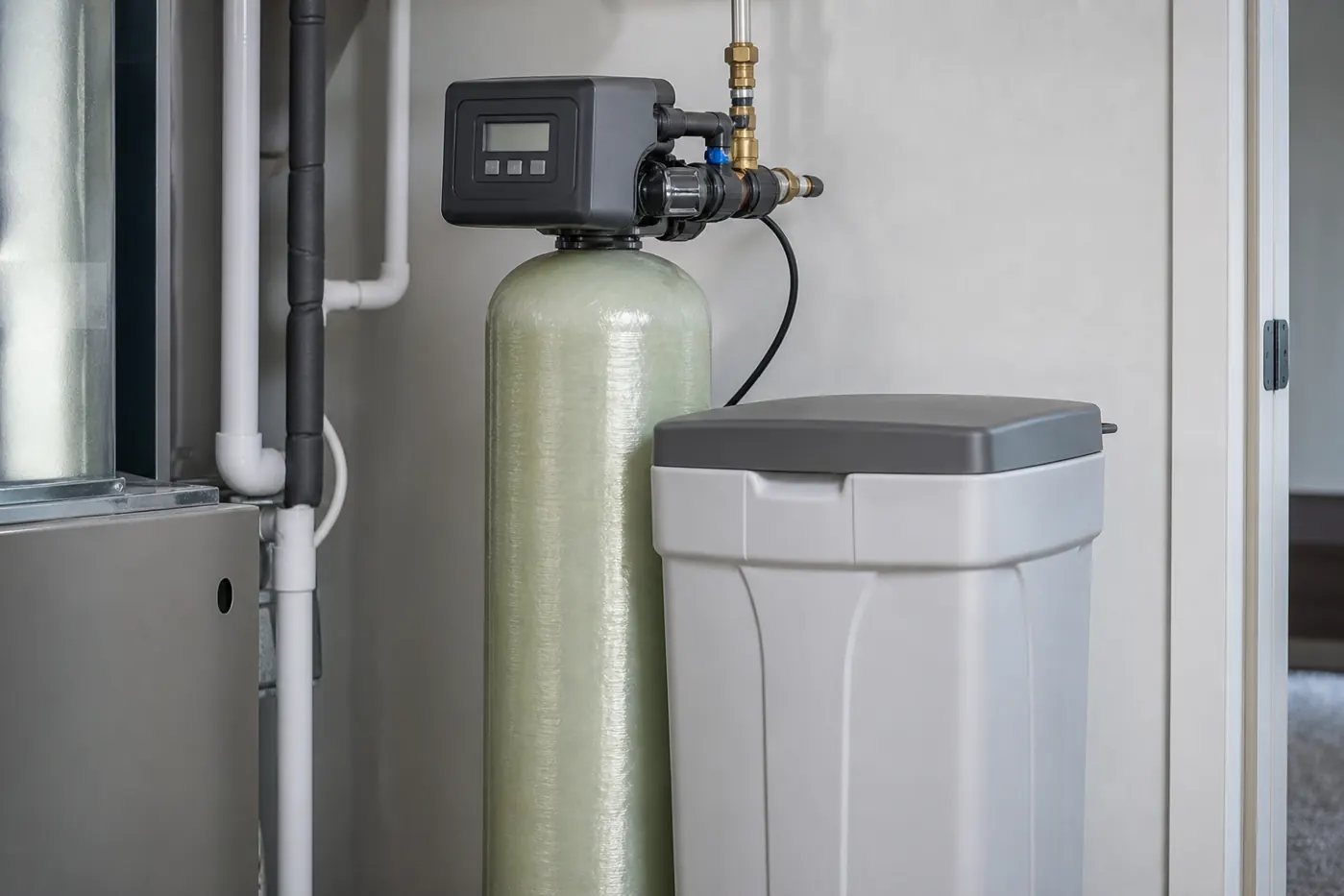
The system tucks neatly under your kitchen sink and feeds a dedicated faucet (and, if you like, your fridge and ice maker). It's the perfect finishing step on top of a whole-home softener and filter: the house gets soft, filtered water, and your kitchen gets premium drinking water.
A multi-stage RO system typically includes
Sediment pre-filter — captures dirt, silt, and rust
Carbon pre-filters — reduce chlorine and protect the membrane
RO membrane — removes dissolved solids, metals, and more
Post/polishing filter — for crisp, fresh final taste
Optional remineralization — adds back healthy minerals for taste and pH
Why Castle Rock families love RO water
Noticeably better-tasting water for drinking and cooking
Coffee, tea, and ice that taste clean and pure
No more buying, hauling, and storing bottled water
Peace of mind about what your family is drinking
Compact, quiet, and easy to maintain
Pairs perfectly with
An RO system handles your drinking water; a softener protects your whole home from scale; and whole-home filtration improves every tap. On a private well? Start with our well water treatment assessment first.
Why Castle Rock homeowners add reverse osmosis at the tap
A whole-home softener and filter handle scale and chlorine across the house, but reverse osmosis (RO) is the extra polish step for drinking and cooking water — pushing water through a semi-permeable membrane fine enough to reject dissolved solids, sodium (including softener-added sodium), nitrates, and many other contaminants that carbon filtration alone won't touch. For Castle Rock's mineral-heavy Denver Basin supply, RO is popular with households who want bottled-quality water without the plastic bottles.
How the system works
A typical under-sink RO system runs water through a sediment pre-filter, a carbon pre-filter, the RO membrane itself, and a carbon polishing filter before storing purified water in a small dedicated tank with its own kitchen faucet. The reject water carrying the removed minerals goes to the drain — a normal and expected part of the process. Installation is usually completed in a few hours with minimal disruption.
RO + softened water: better together
Softened water actually helps an RO membrane last longer, since scale-forming minerals are already removed before reaching the membrane — meaning Castle Rock homes that combine a whole-home softener with an RO tap typically see longer membrane life and lower long-term filter costs than RO alone on hard, unsoftened water.
Maintenance
Pre-filters are typically swapped every 6-12 months, the membrane itself every 2-3 years depending on usage and incoming water hardness, and the storage tank checked periodically for air pressure. We offer a maintenance plan so Castle Rock households never have to track filter change dates themselves.
Reverse osmosis FAQ
Does RO waste a lot of water? Modern residential RO systems are far more efficient than older designs, and the reject water is standard graywater going to the drain — not a health or supply concern for typical households.
Will RO water taste flat? Some people notice ultra-pure water tastes different at first; most RO systems include a post-filter that adds back a touch of mineral taste and buffers pH.
Can I install RO without a softener? Yes, RO can be installed standalone, though membrane life is generally shorter when treating hard, unsoftened Castle Rock water directly.
Illustrative equipment and testing imagery; final systems depend on the property and water analysis.
Reverse Osmosis System Selection and Care
Reverse osmosis uses water pressure and a semipermeable membrane to separate dissolved material from a portion of the feed water. A typical under-sink system includes sediment and carbon prefilters, the membrane, a storage tank, and a final polishing filter. The result is convenient drinking and cooking water at a dedicated faucet without treating every gallon used for bathing or irrigation.
What RO can reduce
Depending on the tested model and membrane, RO can reduce total dissolved solids and many substances such as fluoride, nitrate, sodium, arsenic, lead, and chromium. Performance varies by system and water conditions. Certification to the appropriate NSF/ANSI standard is stronger evidence than a broad marketing claim, and no treatment system should be represented as removing every contaminant.
Pressure, recovery, and storage
Membranes require adequate incoming pressure. Low pressure reduces production and can increase reject water, so some homes benefit from a booster pump. Tank size should match household demand, and high-use kitchens may prefer a tankless or high-recovery design. Proper installation includes an air gap where required and a drain connection that prevents cross-contamination.
RO maintenance in Castle Rock homes
Prefilters and postfilters commonly need replacement every six to twelve months, while membrane life often spans several years depending on feed-water quality and use. A softened feed can protect the membrane from scale. Sanitizing the housings and tank during service, checking pressure, and measuring product-water TDS helps confirm that the system is working as intended.
A sudden drop in flow may point to low tank pressure, a clogged prefilter, a fouled membrane, or low incoming pressure. An unusual taste after a filter change usually clears after the manufacturer’s specified flush. Persistent odor, leakage, or a major TDS increase deserves professional inspection.
Comparing bottled water and home RO
Home RO can reduce recurring bottle purchases, storage, and plastic waste while keeping filtered water available for coffee, ice, pets, and cooking. The best economic comparison includes replacement filters, membrane service, water sent to drain, and the household’s current bottled-water spend. A free test can establish whether RO is useful by itself or works best after whole-home treatment.
Castle Rock Water Quality: Current Local Context
Castle Rock’s official 2026 water-quality report lists 2025 hardness averaging 100 parts per million as calcium carbonate, with results ranging from 61 to 182 ppm—about 3.6 to 10.6 grains per gallon. The Town describes the supply as moderately hard. The report also explains that roughly 70% of 2025 supply came from 63 deep Denver Basin wells and 30% from renewable sources. Because blend and household conditions vary, test the tap before selecting equipment.
Municipal water is treated to meet drinking-water requirements; additional in-home equipment is a personal choice for goals such as reducing scale, changing taste, or adding point-of-use treatment. Private wells are different: Douglas County says owners are responsible for water quality and recommends testing drinking-water wells seasonally or after maintenance. Health-related contaminants require appropriate certified-laboratory testing.