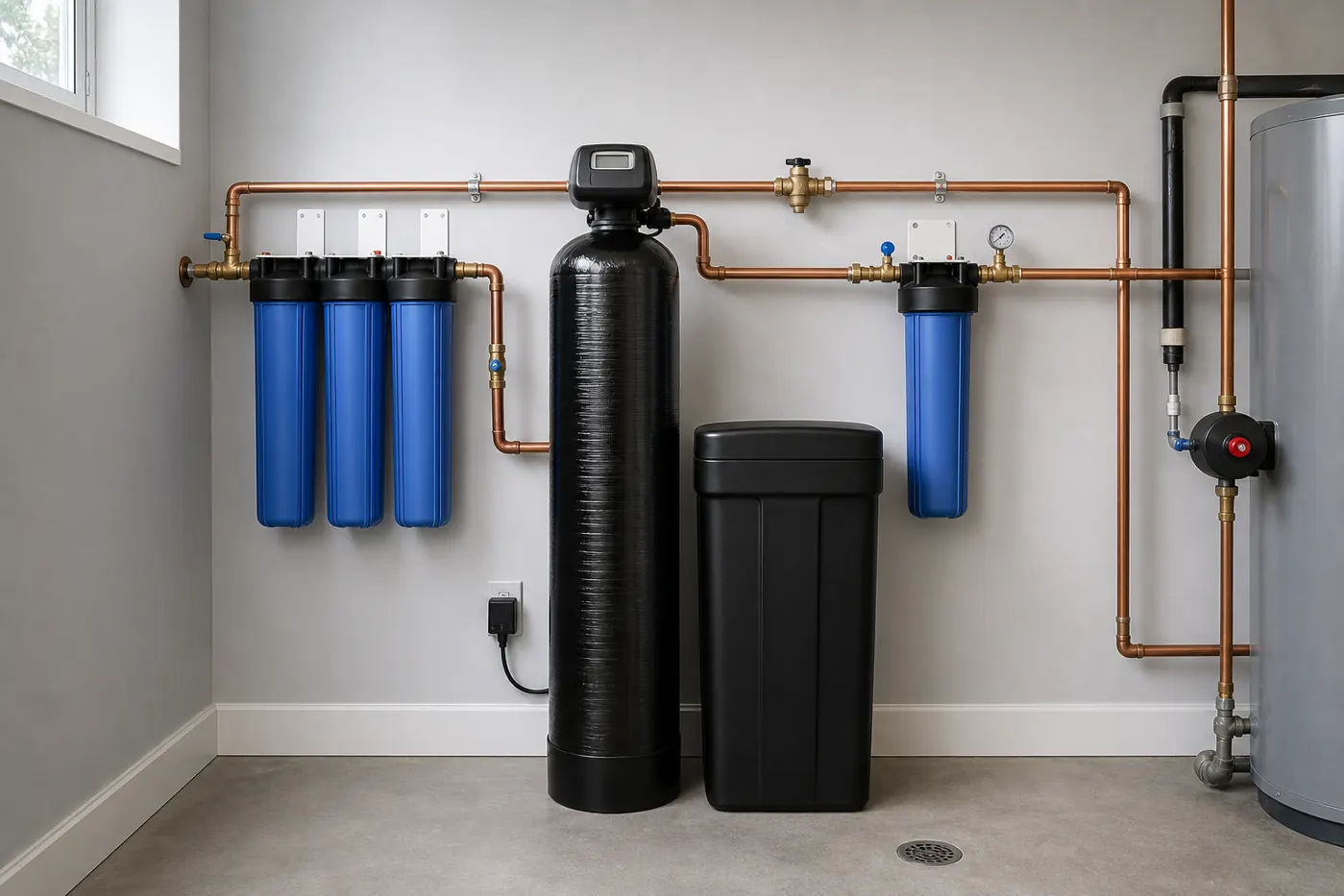
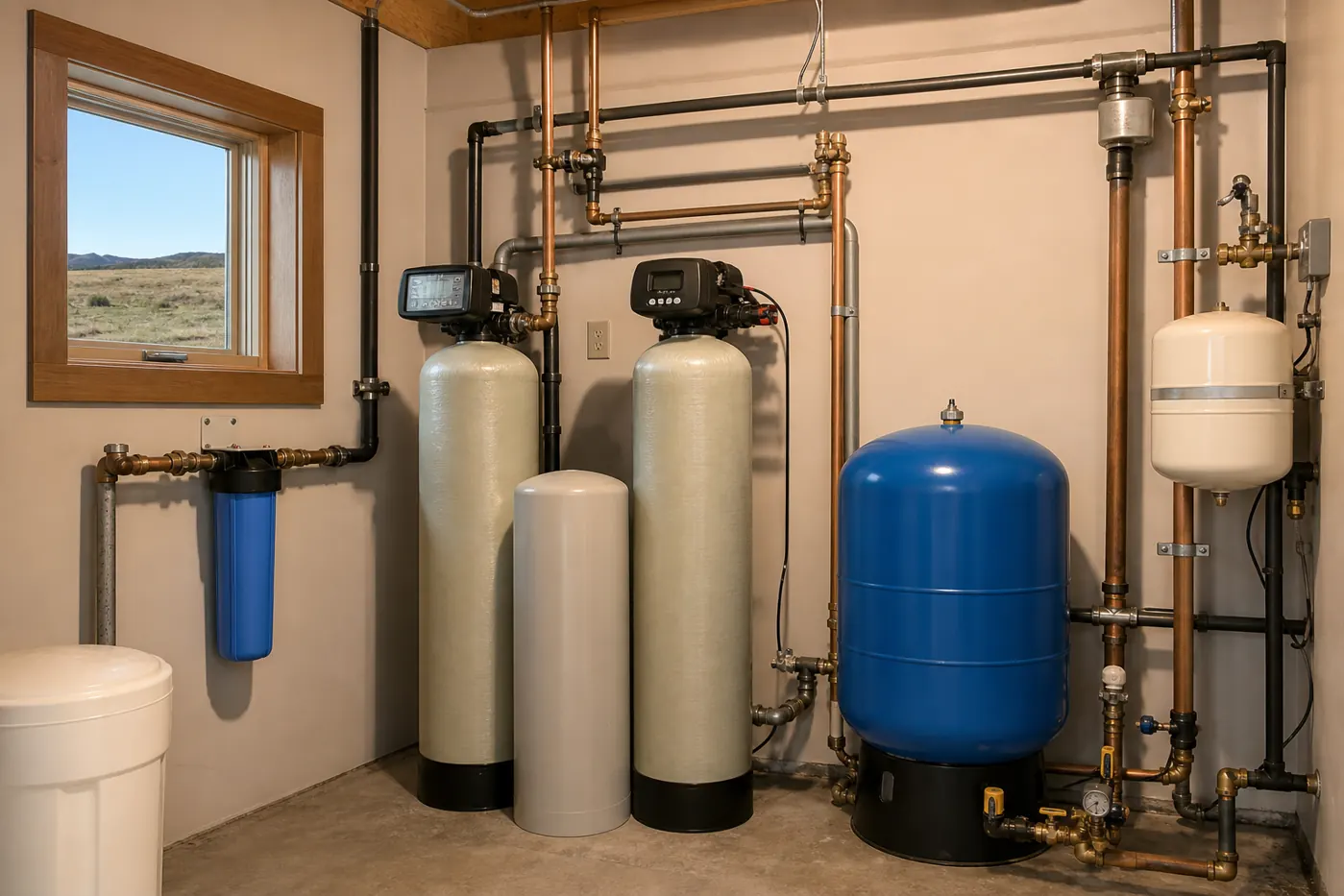
Softening tackles hardness. Filtration tackles everything else — chlorine, sediment, and the tastes and odors that come through your Castle Rock tap. Together they deliver genuinely clean water from every faucet in the house.
Treatment recommendations should be based on site conditions and measured water quality.
Clean water from every tap — not just the kitchen
A whole-home (point-of-entry) filter installs where the water line enters your home, so every tap, shower, and appliance gets filtered water — not just a single faucet. As water flows through, a bed of high-grade catalytic carbon captures the contaminants that affect how your water tastes, smells, and feels.
For Castle Rock homes on municipal water, that usually means stripping out the chlorine or chloramine used for disinfection, along with sediment and organic compounds. The result is water that tastes cleaner, smells fresher, and is gentler on your skin, hair, and fixtures.
What whole-home filtration removes & reduces
Chlorine and chloramine taste and odor
Sediment, silt, rust, and fine particulate
Many organic compounds (VOCs) and disinfection byproducts
That "pool water" smell in showers and baths
Contaminants that dry out skin and fade laundry
Softener + filter: the complete setup
Most Castle Rock homeowners get the best results pairing a water softener with whole-home filtration. The softener removes the hardness that scales your pipes and appliances; the filter removes the chemicals and sediment that affect taste, smell, and skin. Add an under-sink RO system for bottled-quality drinking water and you've covered every use in the home.
Concern
Softener
Whole-Home Filter
Hardness & scale
Yes
No
Chlorine taste & odor
No
Yes
Sediment & particulate
No
Yes
Softer skin & hair
Yes
Yes
What's included
Free in-home water test to identify what's actually in your water
Right-sized carbon filtration matched to your home and usage
Professional single-day install by independent service professionals
Simple, low-maintenance operation with scheduled media service
What whole-home filtration removes from Castle Rock's water supply
Castle Rock's municipal water is treated and safe, but chlorine/chloramine disinfectant byproducts, sediment from aging distribution lines, and occasional taste-and-odor issues are common complaints from homeowners across Founders Village, The Meadows, and Crystal Valley. A whole-home (point-of-entry) filtration system treats every tap in the house — showers, laundry, kitchen — not just one filtered glass at the sink.
How a point-of-entry system is built
A typical Castle Rock whole-home system stacks a sediment pre-filter (removing grit and rust particulate) ahead of a catalytic carbon media tank that reduces chlorine/chloramine, VOCs, and the odor and taste issues they cause. For homes on wells with iron or sulfur ("rotten egg" smell), we add oxidizing or greensand media specifically tuned to those contaminants, confirmed by your free water test results rather than guesswork.
Filtration + softening: why most Castle Rock homes need both
Filtration and softening solve two different problems — filtration addresses taste, odor, chlorine and sediment; softening addresses calcium/magnesium hardness. Because Douglas County water is both chlorinated/blended and hard, most whole-home installs here combine a carbon filtration tank ahead of a softener, so incoming water is both clean-tasting and scale-free by the time it reaches your fixtures.
Install & maintenance
Installation ties into your main line similarly to a softener — typically a single day, with the filtration tank placed upstream. Carbon media generally needs replacement every 3-5 years depending on usage and water chemistry; sediment pre-filters are a simple annual swap. We size media volume to your household's flow rate so pressure stays strong even with the whole house running fixtures at once.
Filtration FAQ
Will this affect my water pressure? Properly sized filtration should not cause a noticeable pressure drop — undersized systems are the most common cause of pressure complaints, which is why sizing is based on your actual peak-flow demand.
Does filtration remove fluoride? Standard carbon filtration does not significantly reduce fluoride; if that's a priority, a reverse-osmosis system at the kitchen tap is the right add-on.
How is this different from a fridge or pitcher filter? Those only treat a single point of use; whole-home filtration protects your water heater, washing machine, and every shower and faucet in the house from chlorine and sediment damage as well.
Illustrative equipment and testing imagery; final systems depend on the property and water analysis.
Whole-Home Filtration Design for Castle Rock Water
A whole-home filter is installed where water enters the residence, allowing showers, laundry, appliances, and kitchen taps to receive treated water. The correct media depends on the actual goal. Activated carbon is commonly used for chlorine, tastes, odors, and many organic compounds. Sediment filtration captures suspended particles. Specialized media may be needed for iron, manganese, arsenic, nitrate, or other concerns confirmed by testing.
City water and private wells need different plans
Municipal customers usually focus on disinfectant taste, odor, sediment, and protecting downstream equipment. Private-well homes around Douglas County may need a sequence that includes sediment removal, oxidation, iron filtration, pH correction, ultraviolet disinfection, or softening. No single tank removes every possible contaminant, which is why treatment should follow a water analysis rather than a product pitch.
Flow rate, pressure drop, and media life
A filter must support the home’s peak demand without turning a strong shower into a trickle. Designers evaluate pipe size, fixture count, service flow, backwash requirements, and incoming pressure. Media life is affected by gallons used and contaminant load; “lasts ten years” is not meaningful without those assumptions. Pressure gauges before and after sediment stages make restriction easier to diagnose.
Whole-house water filter cost and maintenance
Project cost varies with the number of stages, tank and valve size, plumbing access, drain availability, and whether electrical work is required. Cartridge systems usually have lower entry cost but need regular replacements. Backwashing tanks cost more initially but can handle higher flow and often reduce cartridge waste. Ask for the replacement schedule, media cost, warranty, and annual ownership estimate in writing.
Maintenance may include changing prefilters, sanitizing housings, replacing carbon or specialty media, inspecting bypass valves, and confirming that backwash cycles complete correctly. A calendar reminder and a recorded baseline pressure reading prevent most neglected-filter problems.
Questions to ask before installation
Request the water-test basis for the recommendation, the contaminants the system is designed to reduce, certifications relevant to those claims, expected service flow, pressure loss, maintenance intervals, and disposal or drain requirements. If drinking-water purity is the primary concern, whole-home filtration may be paired with a point-of-use reverse-osmosis system at the kitchen sink.
Castle Rock Water Quality: Current Local Context
Castle Rock’s official 2026 water-quality report lists 2025 hardness averaging 100 parts per million as calcium carbonate, with results ranging from 61 to 182 ppm—about 3.6 to 10.6 grains per gallon. The Town describes the supply as moderately hard. The report also explains that roughly 70% of 2025 supply came from 63 deep Denver Basin wells and 30% from renewable sources. Because blend and household conditions vary, test the tap before selecting equipment.
Municipal water is treated to meet drinking-water requirements; additional in-home equipment is a personal choice for goals such as reducing scale, changing taste, or adding point-of-use treatment. Private wells are different: Douglas County says owners are responsible for water quality and recommends testing drinking-water wells seasonally or after maintenance. Health-related contaminants require appropriate certified-laboratory testing.