Well Water Treatment in Castle Rock & Douglas County, CO
Thousands of homes around Castle Rock, Franktown, and Sedalia run on private wells. That water is all different — iron, sulfur, hardness, and more. We test yours and build a system tuned to it, so you get clean, safe, great-feeling water.
Treatment recommendations should be based on site conditions and measured water quality.
Every well is different — your system should be too
Unlike municipal water, private well water isn't treated before it reaches your home, and its chemistry varies well to well — even between neighbors. A system built for someone else's well can leave your problems unsolved (or create new ones). That's why we always start with a thorough test of your water before recommending anything.
Common Douglas County well water issues
Hardness — heavy scale from high calcium and magnesium
Iron — rusty, orange staining on fixtures and laundry
Sulfur — that "rotten egg" smell in the water
Sediment & turbidity — grit, cloudiness, and clogged fixtures
Manganese — black or brown staining
Bacteria & low pH — safety and corrosion concerns
How we solve it
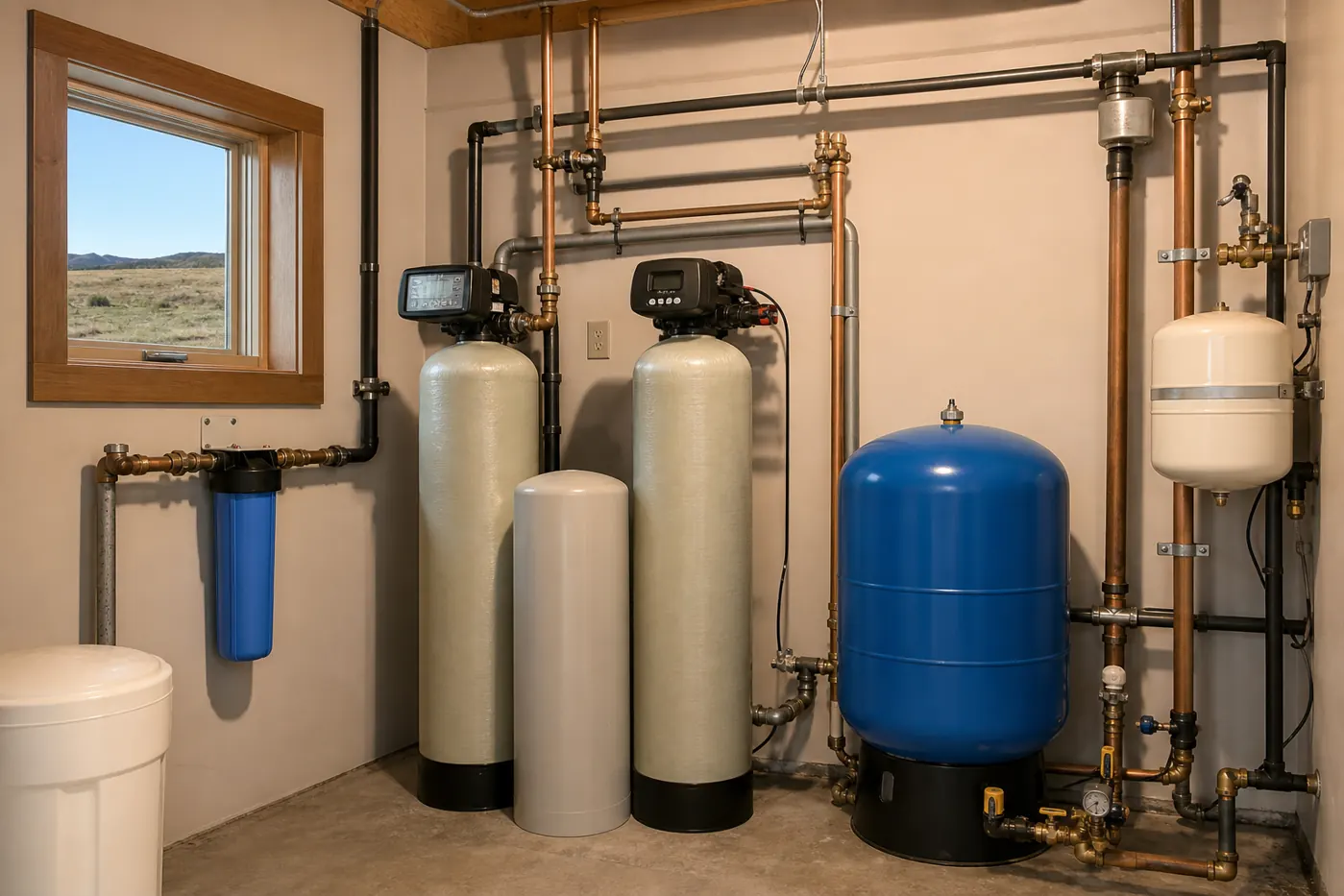
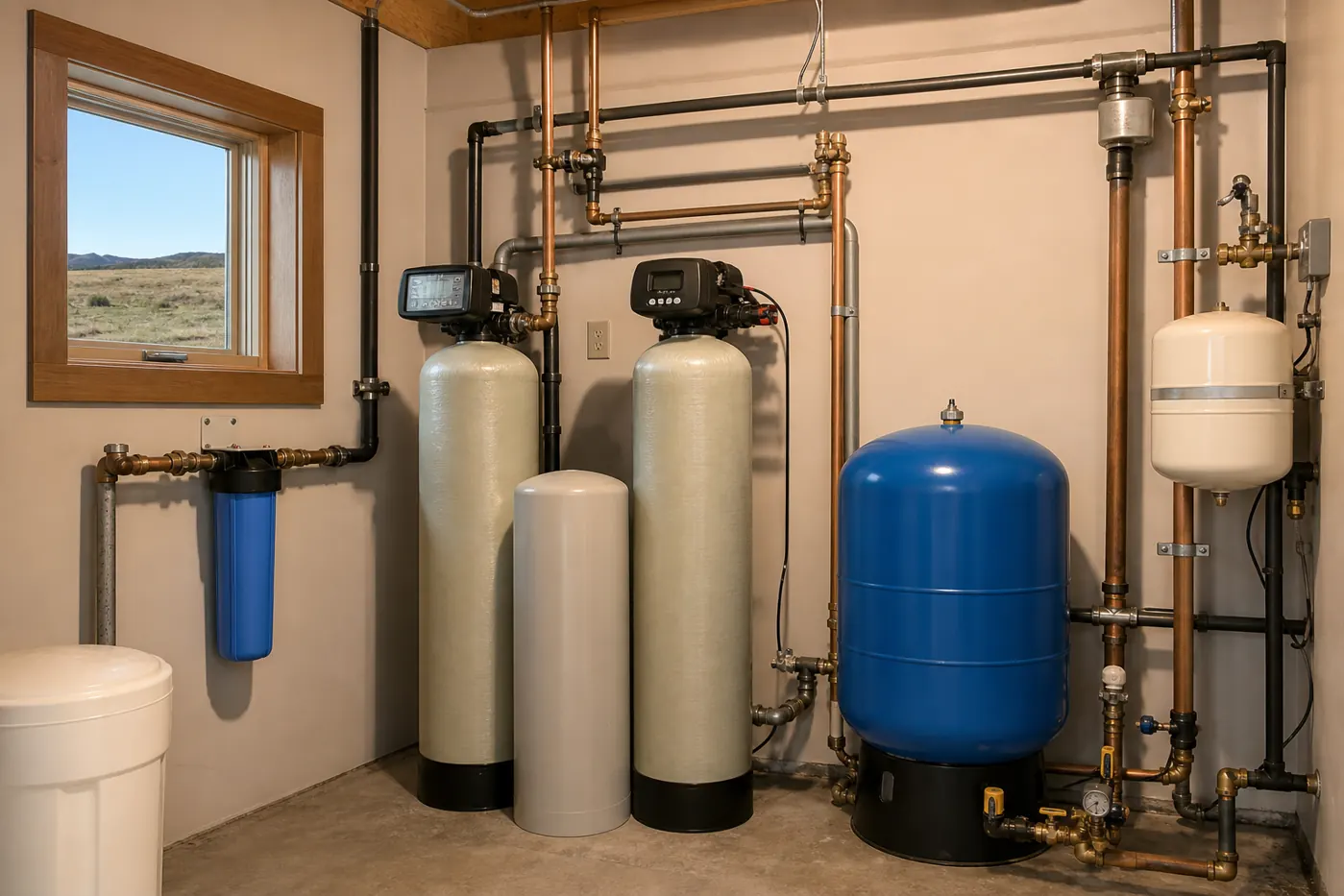
Well water almost always calls for a multi-stage approach, sequenced correctly for your specific chemistry. Depending on your test results, that can include:
Sediment and pre-filtration to protect downstream equipment
Iron, sulfur, and manganese removal (oxidizing / filtration media)
We size and stage every component around your test results and your household's water use — no oversized packages, no guesswork.
Why local matters for wells
We treat wells across Castle Rock and rural Douglas County every week, so we know the regional patterns — and we're nearby when your system needs service, media changes, or seasonal adjustments. Start with a free water test.
What's actually in Douglas County well water
Private wells around Franktown, Sedalia, and the outer edges of Castle Rock draw from the Denver Basin aquifer system, and unlike municipal supply, well water isn't treated before it reaches your home. Beyond the hardness common to the whole area, wells here commonly carry iron (staining fixtures and laundry rust-orange), sulfur (a "rotten egg" smell from hydrogen sulfide), sediment/turbidity, and occasionally elevated pH or nitrates depending on depth and surrounding land use. Every well is different — which is exactly why we test yours specifically rather than assuming.
Building a system around your test results
A private-well system is designed layer by layer based on what your free water test finds: a sediment filter for turbidity, an oxidizing filter (air injection or chlorination) followed by a backwashing filter for iron and sulfur, and a softener for hardness — stacked in the correct order so each stage protects the next. Skipping the oxidation step before a softener, for example, is a common mistake that fouls the softener's resin bed with iron and shortens its life dramatically.
Well-specific considerations
Because there's no municipal oversight on private wells, we also check well pump pressure and flow rate to make sure any added treatment equipment doesn't create a pressure bottleneck, and we test annually-recommended parameters (coliform bacteria, nitrates) so you know your water is safe, not just softened and clear. Douglas County's semi-arid climate also means many wells see seasonal flow and quality shifts worth monitoring.
Install & ongoing care
Installation typically takes a full day given the extra components involved (oxidation stage, backwashing filters, softener). After that, media and filter changes happen on a schedule tuned to your specific well chemistry and usage — we'll set that schedule from your test data, not a generic default.
Well water FAQ
How often should I test my well water? We recommend a full water test annually at minimum, and immediately after any noticeable taste, odor, or color change.
My water smells like rotten eggs — is that dangerous? Hydrogen sulfide odor is a common well issue in this area and is treatable with proper oxidation and filtration; it's a nuisance and taste issue more than a health hazard at typical concentrations, but should still be addressed and tested.
Do I need a permit for well treatment equipment? Treatment equipment installation typically doesn't require a well permit, but we'll flag anything Douglas County requires for your specific setup during your free assessment.
Illustrative equipment and testing imagery; final systems depend on the property and water analysis.
A Test-First Plan for Douglas County Wells
Private-well owners manage their own water quality. Water can look clear and still contain bacteria, nitrate, arsenic, or other constituents that cannot be identified by taste or odor. A field test is useful for hardness, iron, pH, and treatment sizing, but health-related decisions should rely on a certified laboratory and a sample collected according to its instructions.
Common treatment sequence
A well-water system may begin with sediment separation, followed by oxidation and filtration for iron or sulfur, neutralization for acidic water, softening for hardness, and ultraviolet disinfection when microbiological protection is appropriate. The order matters: installing a softener ahead of heavy sediment or untreated iron can foul the resin and shorten equipment life.
Well yield, pressure tanks, and peak flow
Treatment equipment must fit the well’s sustainable yield and the pressure system’s behavior. Backwashing filters require enough flow to lift and clean the media. A weak well or undersized pump may need storage or a different design. Pressure-tank cycling, pump condition, and plumbing diameter should be checked before blaming treatment equipment for low household pressure.
Recommended well-water testing schedule
Many public-health agencies advise testing private wells at least annually for total coliform bacteria and nitrate, with additional testing after flooding, well repairs, changes in taste or odor, nearby land-use changes, or unexplained illness. Local geology and property history may justify other analytes. Keep laboratory reports so changes over time are visible and treatment can be verified with before-and-after results.
Disinfection is not a substitute for fixing a damaged well cap, poor grading, or a cross-connection. Treatment works best when the wellhead and plumbing are sanitary and surface water drains away from the casing.
Questions for a well-treatment proposal
Ask which test result supports every stage, what flow is required for service and backwash, where discharge will go, what happens during a power outage, which consumables are needed, and how performance will be verified. A clear proposal separates aesthetic concerns—staining, odor, hardness—from health-related contaminants and avoids promising that one device solves both without evidence.
Castle Rock Water Quality: Current Local Context
Castle Rock’s official 2026 water-quality report lists 2025 hardness averaging 100 parts per million as calcium carbonate, with results ranging from 61 to 182 ppm—about 3.6 to 10.6 grains per gallon. The Town describes the supply as moderately hard. The report also explains that roughly 70% of 2025 supply came from 63 deep Denver Basin wells and 30% from renewable sources. Because blend and household conditions vary, test the tap before selecting equipment.
Municipal water is treated to meet drinking-water requirements; additional in-home equipment is a personal choice for goals such as reducing scale, changing taste, or adding point-of-use treatment. Private wells are different: Douglas County says owners are responsible for water quality and recommends testing drinking-water wells seasonally or after maintenance. Health-related contaminants require appropriate certified-laboratory testing.